
Nice, and everywhere it reaches.
Corniche mornings to Monaco, market breakfasts on Cours Saleya, boat runs past Villefranche and the long day inland to lavender: what each one is like, what it costs, where to book.
Book these seven and the week works.
First visit or fifth, these are the ones people come home talking about: the corniche run east to Monaco, a food walk through Vieux Nice, an hour on the water off Villefranche.
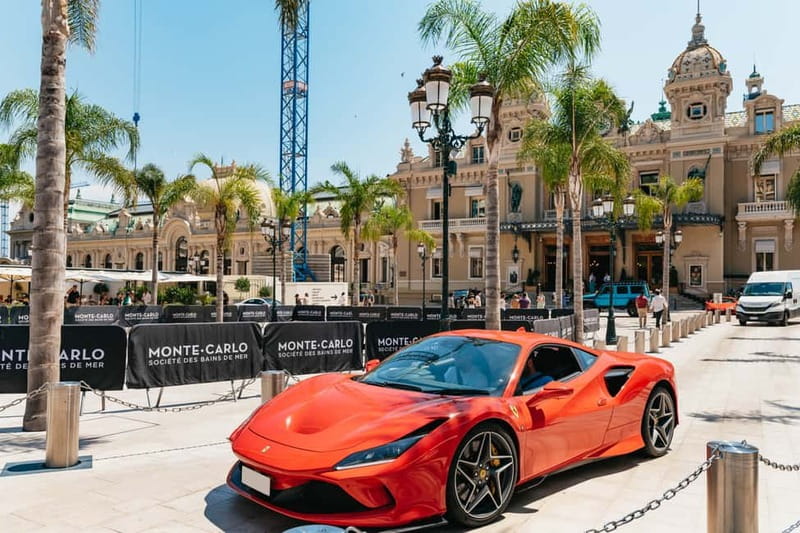
French Riviera in One Day
In 9 hours from Nice, see Èze, Monaco, Antibes, Saint-Paul de Vence and Cannes by air-conditioned bus, plus panoramic views and perfume.
From $85 per person
Read the review → ★ 4.4Books out fastGorges of Verdon and Fields of Lavender TourFrom $1251,975 reviews
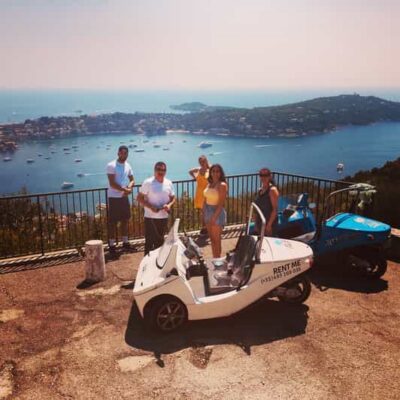 ★ 4.9Local favouriteExclusive Guided Tour in a One-of-a-Kind Electric CarFrom $561,301 reviews
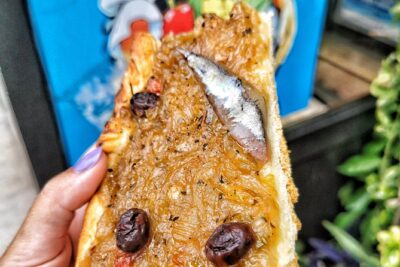 ★ 5.0Easy first dayNO DIET CLUB – Unique Local Food in Nice !From $811,267 reviews
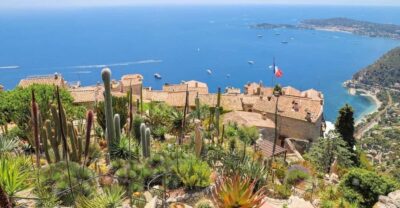 ★ 4.8Worth the early startThe Best of the French Riviera Full Day TourFrom $1121,130 reviews
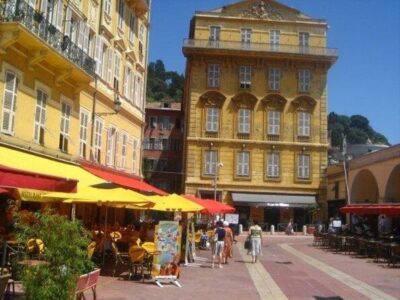 ★ 5.0Small groupNice City Segway Sightseeing TourFrom $421,050 reviews
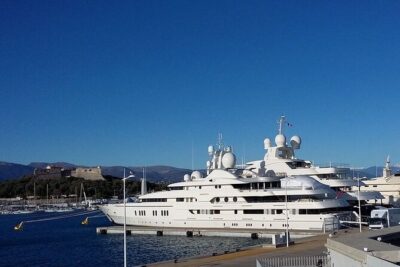 ★ 5.0Sunset pickThe Best of the French Riviera Small group Guided Tour from NiceFrom $1141,033 reviews
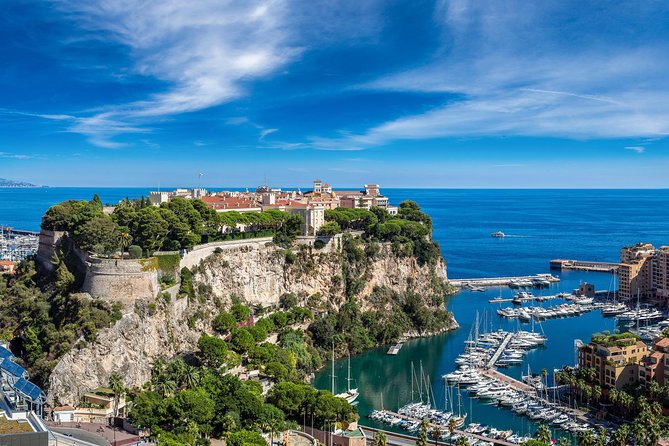
Three roads east, one very good day.
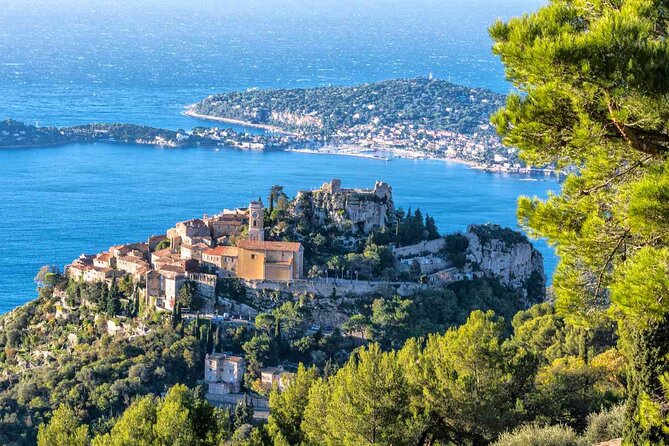
The Moyenne Corniche climbs to Èze and its cactus garden, the Grande Corniche looks down on all of it from La Turbie, and the coast road drops you into Monaco in time for the guard change at the palace. Most tours take in all three before lunch.
Which direction gets your free day?
Nice is a base as much as a city. East is Monaco and the cliff villages, north is lavender and gorges, west is the artists’ coast. Three shapes of day, each one priced and rated below.
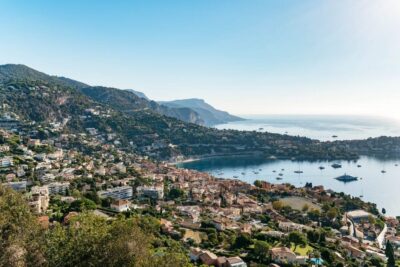 Half a day east
Monaco and the cliff villages
5 hours · from $42 · 5,642 reviews
Èze perched five hundred metres above the water, the perfumery at the bottom of the hill, then Monte-Carlo for the casino terrace and the harbour full of improbable boats. Back in Nice by mid-afternoon with the evening still yours.
See the Monaco half-days →
Half a day east
Monaco and the cliff villages
5 hours · from $42 · 5,642 reviews
Èze perched five hundred metres above the water, the perfumery at the bottom of the hill, then Monte-Carlo for the casino terrace and the harbour full of improbable boats. Back in Nice by mid-afternoon with the evening still yours.
See the Monaco half-days →
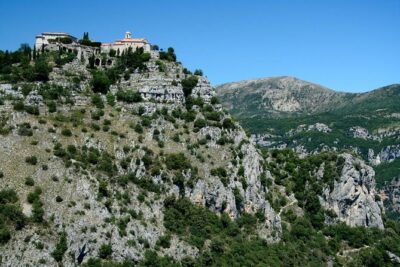 The long inland day
Lavender, gorges and hill villages
8 hours (approx.) · from $135 · 613 reviews
Up through Grasse and out to the Verdon, where the river runs an improbable green and the lavender rows reach the horizon through July. A full day in a minibus, and the one people talk about afterwards.
See the Provence days →
The long inland day
Lavender, gorges and hill villages
8 hours (approx.) · from $135 · 613 reviews
Up through Grasse and out to the Verdon, where the river runs an improbable green and the lavender rows reach the horizon through July. A full day in a minibus, and the one people talk about afterwards.
See the Provence days →
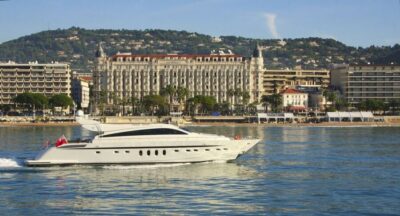 West along the bay
Cannes and the artists’ coast
5 hours · from $42 · 675 reviews
Antibes for the ramparts and the Picasso rooms, Cannes for the Croisette, Saint-Paul-de-Vence for stone lanes and galleries above the vines. The gentlest of the three, and the best of them for photographs.
See the Cannes and Antibes days →
West along the bay
Cannes and the artists’ coast
5 hours · from $42 · 675 reviews
Antibes for the ramparts and the Picasso rooms, Cannes for the Croisette, Saint-Paul-de-Vence for stone lanes and galleries above the vines. The gentlest of the three, and the best of them for photographs.
See the Cannes and Antibes days →

Nice does not go quiet at seven.
The old-town alleys fill up as the market packs away, the port bars start late and finish later, and a socca stop somewhere off Rue Droite is part of the evening. Go the first time with someone who knows which door is which.
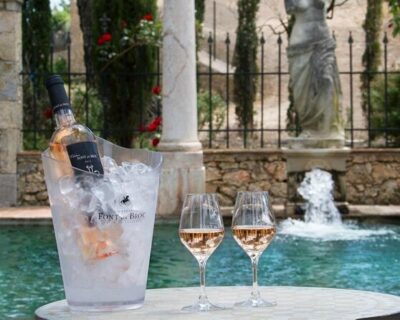
Socca, pissaladière and a glass of Bellet.
Niçoise cooking sits closer to Liguria than to Paris. Chickpea pancakes off a hot iron, onion tart under anchovies, tiny stuffed vegetables, and a wine appellation growing inside the city boundary. Three hours with a guide beats a week of guessing.

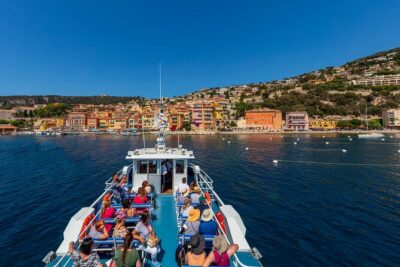
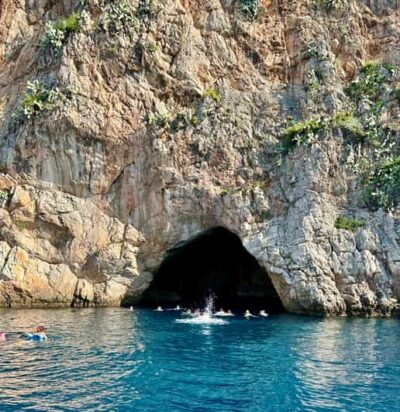
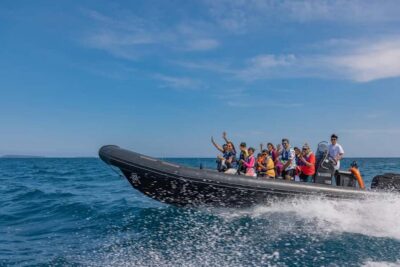
The bay is the other half of the city.
Villefranche is deep, clear and ten minutes away by boat. Snorkel the Mala caves, run the coast to Monaco at speed, or take the sunset trip with a glass in hand and watch the city light up from the water.
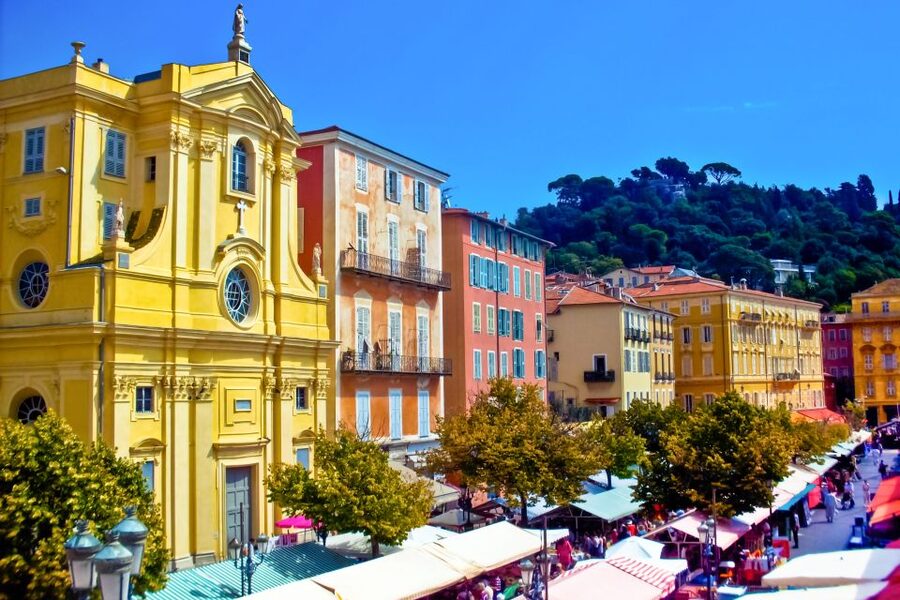
The old town keeps Italian hours.
Ochre walls, washing strung over the lanes, baroque churches that open onto an alley barely wider than their doors, and Cours Saleya selling flowers by seven. Nice was Nizza until 1860, and the old town never entirely agreed to the change.
Every stop on this coast is a day.
Èze for the cliff and the perfume. Villefranche for the water. Monte-Carlo for the terrace. Saint-Paul-de-Vence for the galleries above the vines.
Choose by what you feel like.
Twelve ways to spend an afternoon on this coast, from a perfume bench in Grasse to a speedboat out of the port. Everything behind each tile is priced and rated.



The good stuff is thirty minutes away.
Trains and minibuses run up the coast and into the hills all day. Monaco is twenty minutes, Grasse under an hour, and the Verdon gorges are a long spectacular haul worth setting an alarm for.
Three days from one base.
Nobody sees the whole Riviera in one trip, but three days from a Nice base covers the city, the coast east and one long run inland. This is the order that works.
 Day 1
Get your bearings in the old town
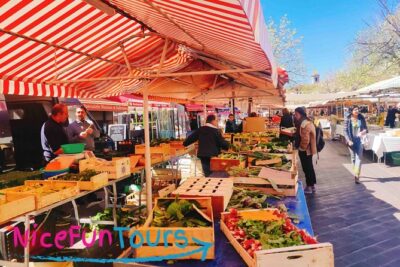
Cours Saleya before the flowers wilt, socca eaten standing up, then the climb to Castle Hill for the whole bay at once. Ease into it; the walking adds up.
Plan day one →
Day 2
East to Monaco
The corniche roads, Èze at cliff level, the perfumery below it, then Monte-Carlo for the harbour and the casino square. Home along the coast with the sun behind you.
Plan day two →
Day 1
Get your bearings in the old town
Cours Saleya before the flowers wilt, socca eaten standing up, then the climb to Castle Hill for the whole bay at once. Ease into it; the walking adds up.
Plan day one →
Day 2
East to Monaco
The corniche roads, Èze at cliff level, the perfumery below it, then Monte-Carlo for the harbour and the casino square. Home along the coast with the sun behind you.
Plan day two →
 Day 3
The water or the hills
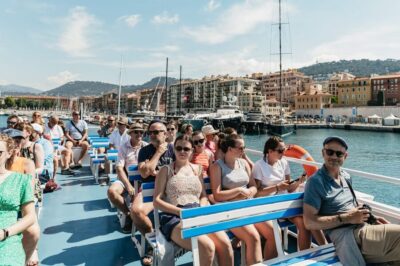
Either a boat out past Villefranche with a swim stop, or the long run inland through Grasse to the lavender and the gorges. Check the wind forecast and choose accordingly.
Plan day three →
Day 3
The water or the hills
Either a boat out past Villefranche with a swim stop, or the long run inland through Grasse to the lavender and the gorges. Check the wind forecast and choose accordingly.
Plan day three →
Latest Nice tour reviews.
 ★ 5.0Provence Sea & Countryside Full-Day Private TourFrom $1,1223 reviews
 ★ 5.0Villefranche Shore Excursion: 6 hrs Private Tour Eze and MonacoFrom $9553 reviews
 ★ 5.0Sunset Private Boat Tour In NiceFrom $1,0353 reviews
 ★ 5.0Private Cruise Excursion “Highlights of the French Riviera”From $1,0643 reviews
 ★ 4.5Antibes, Cannes, Eze village, Perfume Fragonard, Monte Carlo-MonacoFrom $1623 reviews
 ★ 5.0Provence and Tradition – Private Guided TourFrom $8373 reviews
 ★ 4.5Private Tour of Nice, Monaco & Eze with a local guideFrom $1,2563 reviews
 ★ 5.0Monaco and Perched Medieval Villages – private & Guided TourFrom $1,2723 reviews