

REVIEW · NICE OLD TOWN TOURS
Nice: Old Town Highlights Walking Tour
If you want Nice Fast, start in Old Town. This 2-hour walk pairs street-level history with real local flavor, so the city feels clear from the first corner. I especially like how the guide weaves major landmarks with small, memorable stories that make the places stick.
You’ll also get practical help for what to look for and what to eat, with tips and tricks that fit the moment. One thing to consider is that this is still a walking tour, so wear comfortable shoes and expect lively, narrow lanes around the market area.
Key highlights to watch for
- Place Garibaldi start that sets the history straight away
- Rue Droite to Palais Lascaris and the facade you will actually remember
- Natural cooling story about how residents handled heat long ago
- Cathédrale Sainte-Réparate with its Baroque, Italian-influenced facade
- Cour Saleya market stop for the food and atmosphere
- Opera house facades and #ILoveNice to close the loop
Starting at Place Garibaldi, you get the map in your head
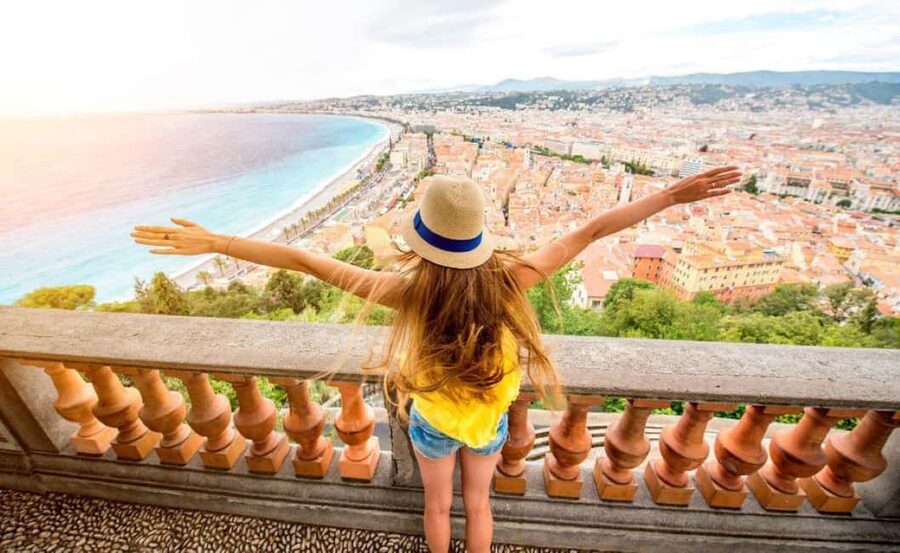
Nice can feel like a big postcard at first. The coast is stunning, sure, but the real magic is in how the city grew and reorganized over time. This tour begins at Place Garibaldi, meeting your guide in front of the Garibaldi statue, so you start with an easy landmark and a clear storyline.
From the start, the guide focuses on what matters for first-time visitors: where you are, why it looks like it does, and what you should notice as you walk. That makes a difference. You’re not just ticking off stops. You’re learning how to read the city, which helps later when you’re wandering on your own.
The tour moves at a friendly walking pace for about two hours, and that length is a good sweet spot. It’s long enough to cover multiple major sites, but short enough that you’re not stuck for an entire day when Nice is also begging you to sit outside and people-watch.
Rue Droite and Palais Lascaris, the facade that tells a lot
One of the most fun segments is the move from Tour and Place Saint-François toward Rue Droite, a street that helps you understand why Nice built so close to itself. This is where the tour leans into the kind of detail you would miss if you were just walking without a plan.
Then you get to the entrance facade of Palais Lascaris, described as both famous and hidden in the way it presents itself from the street. Even without going inside, this stop is useful. The facade gives you a visual anchor, and your guide’s explanation helps you place the palace in the bigger story of Nice.
One of the clever themes here is comfort. The tour points out an ingenious natural air conditioning system used by inhabitants in ancient times. You might not think of “cooling” when you’re sightseeing in the South of France, but hearing how past residents solved the problem makes the old streets feel more practical and human. It also changes how you look at architecture: you stop seeing “pretty stone” and start seeing “design for life.”
If you like architectural side notes and small facts that make you feel like you understand the place, this segment is a highlight. The route also keeps your attention on movement, not just stops, so you’re always oriented.
From high ground to Old Town, you learn why Nice looks like Nice
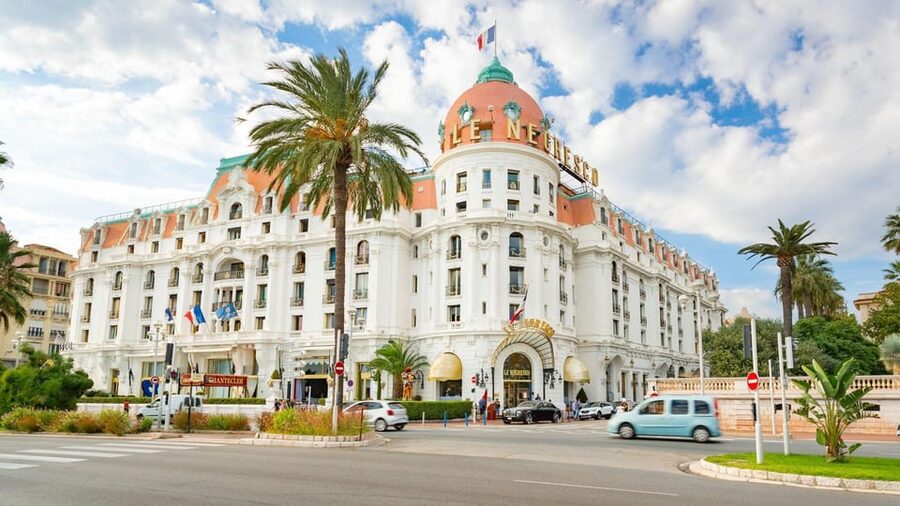
Nice Old Town has layers. The guide explains how the population moved down from higher areas to the actual Old Town as the New City extension grew. That’s not just trivia. It explains the layout you see in front of you, including the way streets tighten and open as you move through different districts.
This part of the tour helps you avoid a common first-timer mistake: assuming every street pattern was created at once. Instead, you understand that Nice expanded, reorganized, and adapted. And once you have that context, you can better predict what you will see next, which makes self-guided wandering after the tour much easier.
The tour also blends history with the lived reality of the city, especially through that natural cooling theme and the way residents dealt with climate. It’s a strong combination because it makes the Old Town feel like a place where people solved real problems, not just a museum set.
Cathédrale Sainte-Réparate, Baroque drama with Italian influence
Next up is the Cathédrale Sainte-Réparate, presented as a Barocco masterpiece with an Italian influence visible in the facade. This is the kind of stop that pays off even if you are not a cathedral person. The guide’s job here is to give you the “what to look for” so you don’t just stand there and hope the details pop out on their own.
Baroque churches can look busy from a distance, but the facade is where your attention should go. The tour frames what you’re seeing, including how the Italian artistic influence shows up. When a guide connects style to place like this, you stop treating architecture like decoration and start treating it like identity.
A practical note: cathedrals and churches are often cooler than the streets outside, and they can give you a break in the walk. Even if you only take in the facade and immediate surroundings, it functions as a reset button before you head toward the livelier market and public squares.
Paganini’s Nice, the oddball story that makes the streets human
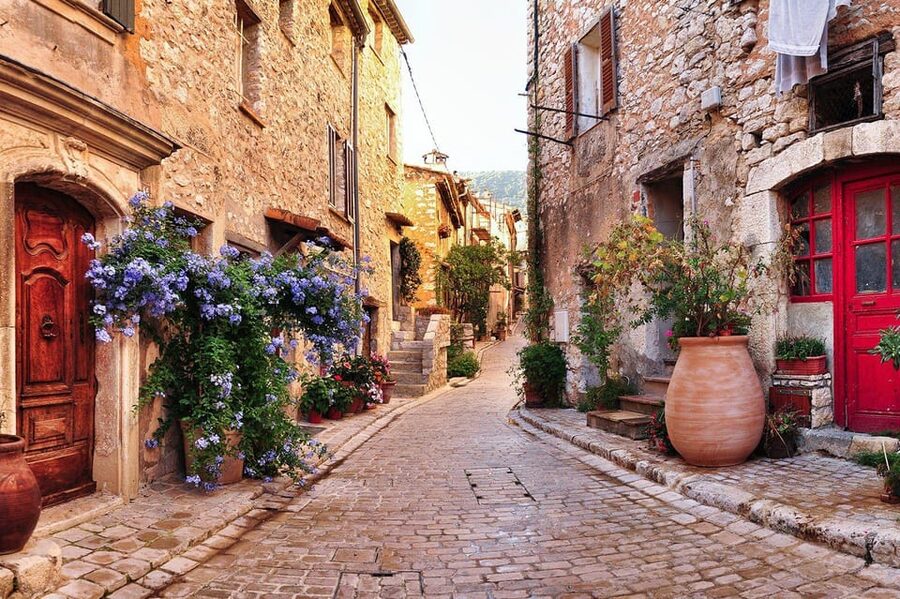
Every city needs one character story, and Nice has one of the best. On the way, your guide tells you about Paganini, described as the most eccentric violinist of all time, and you learn how he ended his life in the Old Town.
This stop is not about a specific monument you can point to for proof. It’s about mood. Paganini’s story gives Nice a personality. It turns the walk from a list of landmarks into something closer to a narrative you can repeat to friends.
I like these moments because they change how the streets feel. When you connect a famous name to a specific place, you start noticing little cues, like the human scale of alleyways and the way public spaces funnel movement. It’s the difference between walking past a street and feeling like you understand why it matters.
Cour Saleya market stop, your best chance for local food advice
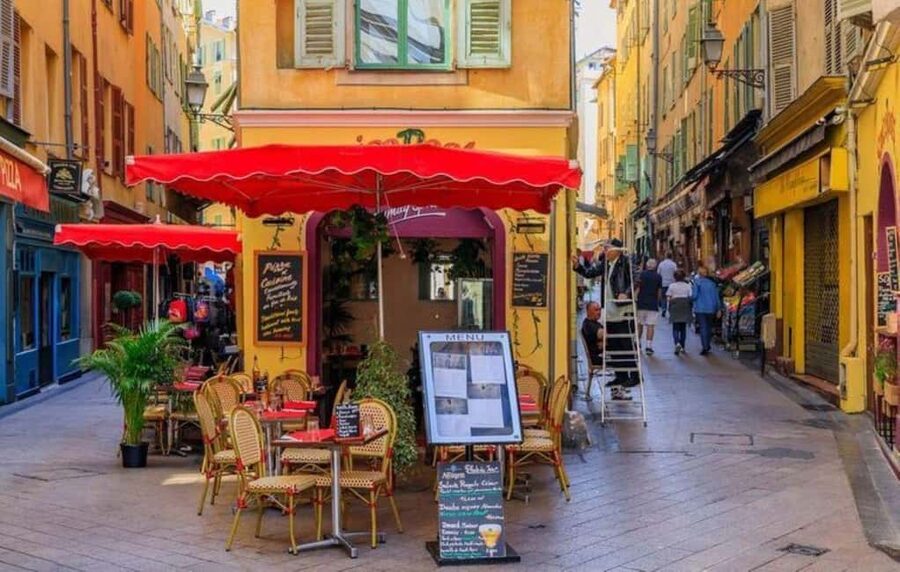
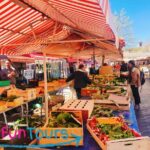
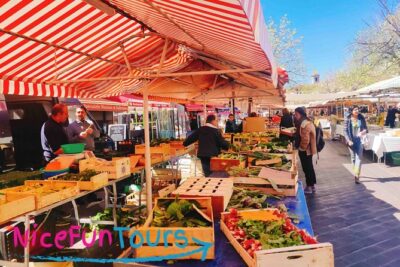
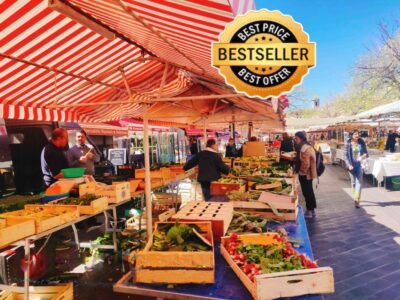
Then the tour reaches Cour Saleya, described as the most known Nice market and a major place to feel local life. If you want one stop that turns history into something you can taste, this is it.
The guide brings in traditional food advice here, which is smart timing. You’re walking through Old Town, hearing stories about the city, and then you get a sensory anchor. The market setting is where you can look at what locals buy, what looks freshest, and what kinds of dishes show up. Even if you do not buy anything, the market gives you visual context for Nice eating culture.
Cour Saleya is also a good place to pause and orient your senses. The streets around it tend to feel more active, and that energy helps you remember why Old Town is worth prioritizing.
Possible drawback to keep in mind: markets can be crowded at peak times, and lanes can feel tight. If you prefer quiet sightseeing, you might want to approach this moment with a flexible mindset and not expect wide-open space. Still, the payoff is strong because this is where your tour advice becomes immediately usable.
Opera house facades and the #ILoveNice photo moment
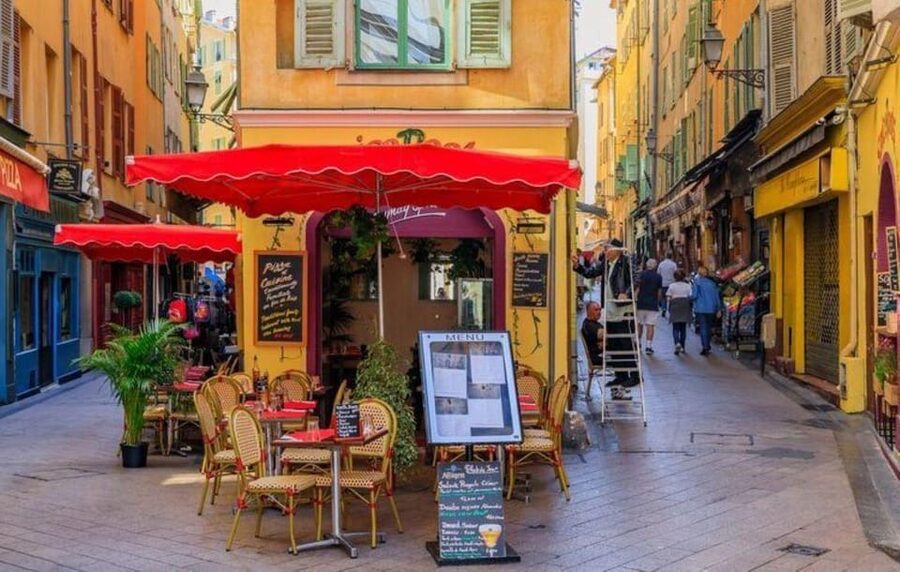
After the market, the tour goes toward the Opera house, highlighting its two facades: one from the street and one from the sea. That detail matters because it changes how you look at the building. Instead of seeing one view, you learn that the Opera is designed for more than one “audience,” depending on which side you approach.
This is a nice wrap-up for the tour’s theme of movement and city growth. You go from alleyways and market squares to a monument that feels more “public,” then back to perspective with the facade that faces the sea.
Finally, you reach the Instagram stop where #ILoveNice is located, and the tour ends there. Even if you are not trying to collect photos, this stop works as a clean conclusion. You get one last visual marker before you continue your day on your own.
If you plan to keep exploring after, take a quick moment at the finish point to decide your next direction. With the Old Town story now in your head, you’ll walk differently.
Price and value at about $6 for a guided 2-hour walk
At $6 per person for a 2-hour walking tour with a live guide, the value is unusually strong. The main reason is not just the price tag. It’s the mix of what you get: landmark guidance, short history lessons, practical tips and tricks, and food advice tied to an actual market stop.
Low-cost tours can sometimes feel rushed. This one appears to work because it gives structure. You have a clear sequence: Garibaldi to Saint-François, Rue Droite and Palais Lascaris, Sainte-Réparate, Paganini’s story, Cour Saleya, the Opera, then #ILoveNice. That kind of flow matters when you only have two hours, because it prevents “wandering fatigue.”
The other value piece is the guide’s style. Reviews highlight a guide who is professional, friendly, and willing to answer questions. Multiple comments mention humor, good energy, and open-mindedness. That matters more than people expect. A guide who can explain without sounding like a textbook makes the tour feel worth your time, even if you already know a little about Nice.
Who this walking tour suits best
This tour fits you if you want:
- A fast, guided way to understand Old Town
- Strong storytelling tied to real places like Palais Lascaris, Sainte-Réparate, Cour Saleya, and the Opera
- Helpful food and sightseeing tips, not just photos of landmarks
- A guide who brings energy and humor rather than lectures
It may not be your best choice if you want long stays in interiors or deep museum time. The tour is designed for walking and seeing the key visual highlights, so you’ll likely use it as a foundation, then branch out on your own.
Because it’s wheelchair accessible, it also works better than many Old Town experiences if you need that option. Still, old city streets can vary, so comfortable footwear and flexible pacing help everyone.
Should you book the Nice Old Town Highlights walking tour?
I’d book this tour if you are prioritizing orientation and stories in a short window. For the $6 price, the inclusion of a live guide and the chance to connect landmarks with local food advice makes it a smart first step in Nice.
Choose it especially if you like tours where the guide feels approachable and can explain details in plain language, with humor and energy. The route hits the kind of places that help you later when you return to wander, because you’ll recognize them and understand what you are looking at.
If you prefer quiet, slow sightseeing or you want interiors and long breaks, you might feel slightly rushed in a two-hour format. But if your goal is to get a strong grip on Old Town fast, this is a very practical pick.
FAQ
Where is the meeting point for the tour?
Meet your guide at Place Garibaldi.
How long is the walking tour?
The tour lasts 2 hours.
What languages are offered?
The live tour guide is available in English and French.
What is included in the price?
The experience includes a walking tour and a guide.
Is the tour wheelchair accessible?
Yes, the tour is wheelchair accessible.
How much does the tour cost?
The price is $6 per person.
Can I cancel if my plans change?
Yes. You can cancel up to 24 hours in advance for a full refund.
More Tour Reviews in Nice



The City in One Go


More Hours in Vieux Nice



Nice Old Town Tours, side by side.
 ★ 5.0★ Walking Tour of Old Nice and Castle HillFrom $391,318 reviews
 ★ 4.8Nice Old Town and Castle Hill: Guided Cultural Walking TourFrom $30790 reviews
 ★ 4.9Food and Wine Old Town Guided Walking TourFrom $99411 reviews
 ★ 4.6Old Town Treasures Walking TourFrom $34388 reviews
 ★ 4.9Old Town & Castle Hill Informative Guided Walking TourFrom $33248 reviews
 ★ 5.0Walking tour of Nice, the old town & the Coline du ChâteauFrom $30200 reviews
 ★ 5.0Nice Small-Group Old Town & Castle Hill Cultural Walking Tour with a Local GuideFrom $3595 reviews
 ★ 4.6Old Town Treasures and Castle Hill Walking TourFrom $5378 reviews